Contributing to IEEE on Algorithmic Bias
How Modulos helped shape IEEE 7003-202, the first international standard on algorithmic bias — and operationalized it in the AI Governance Platform.
Contributing to the Global Standard on Algorithmic Bias
Tags: IEEE 7003-2024 · Algorithmic Bias · Standards Contribution
Problem
Algorithmic bias remains one of the most consequential risks in AI deployment, but until recently there was no internationally recognized standard that defined how organizations should systematically identify, mitigate, and monitor it. Individual companies developed their own approaches, but without a shared framework, bias assessments varied wildly in rigor, scope, and methodology. The result: organizations had no credible benchmark against which to measure their efforts, and regulators had no common reference point to hold them accountable.
Key Figures
| Metric | Value |
|---|---|
| International standard on algorithmic bias | 1st |
| IEEE approval date | December 2024 |
| Frameworks operationalized in Modulos | 4 (IEEE 7003, EU AI Act, ISO 42001, NIST AI RMF) |
Solution
Modulos Advisory Board member Andrea Basso contributed to the development of IEEE 7003-2024, the IEEE Standard for Algorithmic Bias Considerations, approved in December 2024 and published in January 2025. The standard provides a comprehensive framework covering:
- Criteria for selecting validation data sets for bias quality control
- Guidelines for establishing and communicating the application boundaries within which an algorithm has been validated
- Approaches to managing user expectations around system outputs to prevent misinterpretation
Modulos has integrated full support for IEEE 7003-2024 into the Modulos AI Governance Platform, making it one of the frameworks organizations can operationalize alongside the EU AI Act, ISO 42001, and NIST AI RMF.
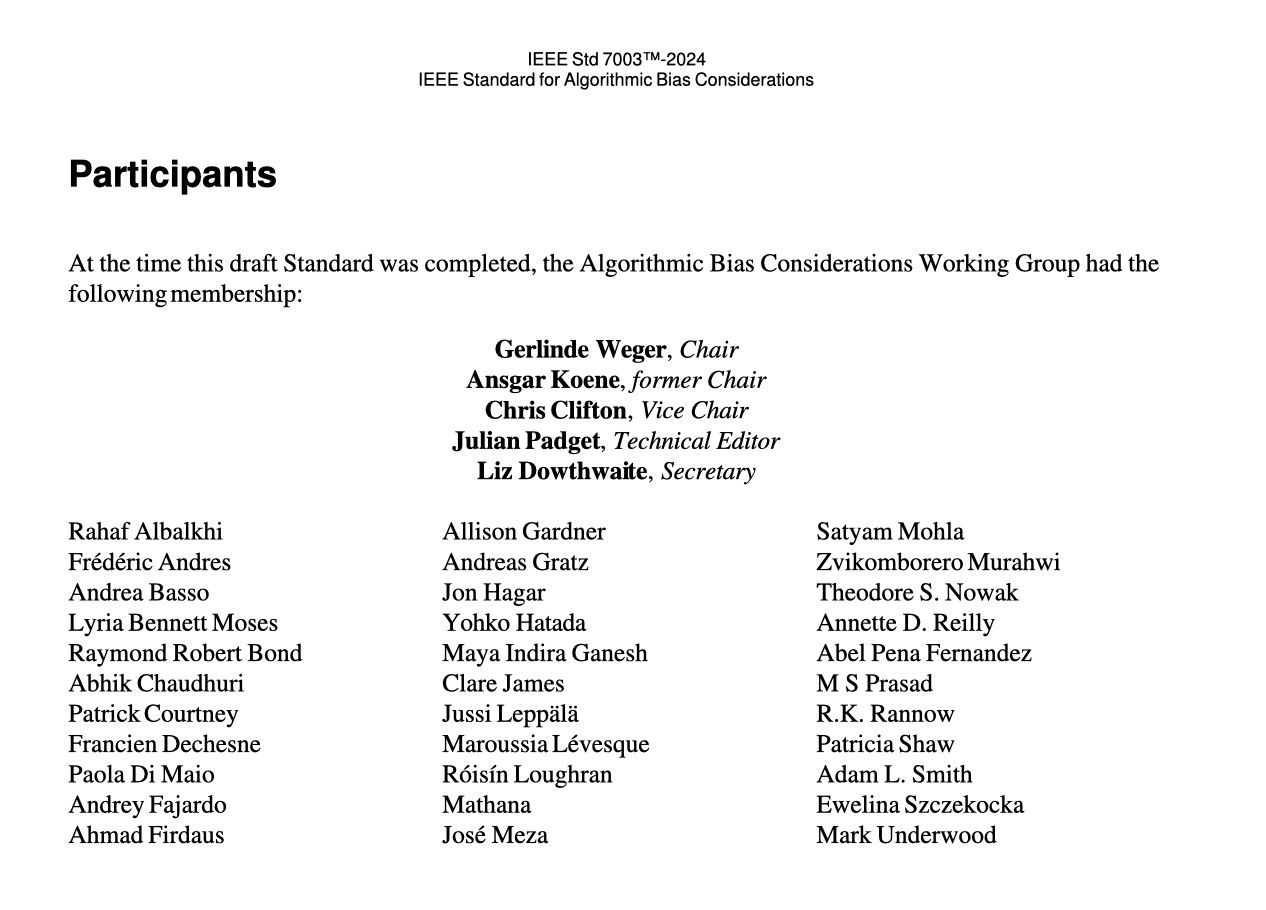
"Standards like IEEE 7003 matter because they turn abstract principles about fairness into concrete, auditable processes. Contributing to this standard was about ensuring that organizations don't just talk about bias mitigation but have a systematic methodology to actually do it. The fact that Modulos now operationalizes it in their platform closes the loop between the standard on paper and governance in practice."
— Andrea Basso, Modulos Advisory Board Member & IEEE Contributor